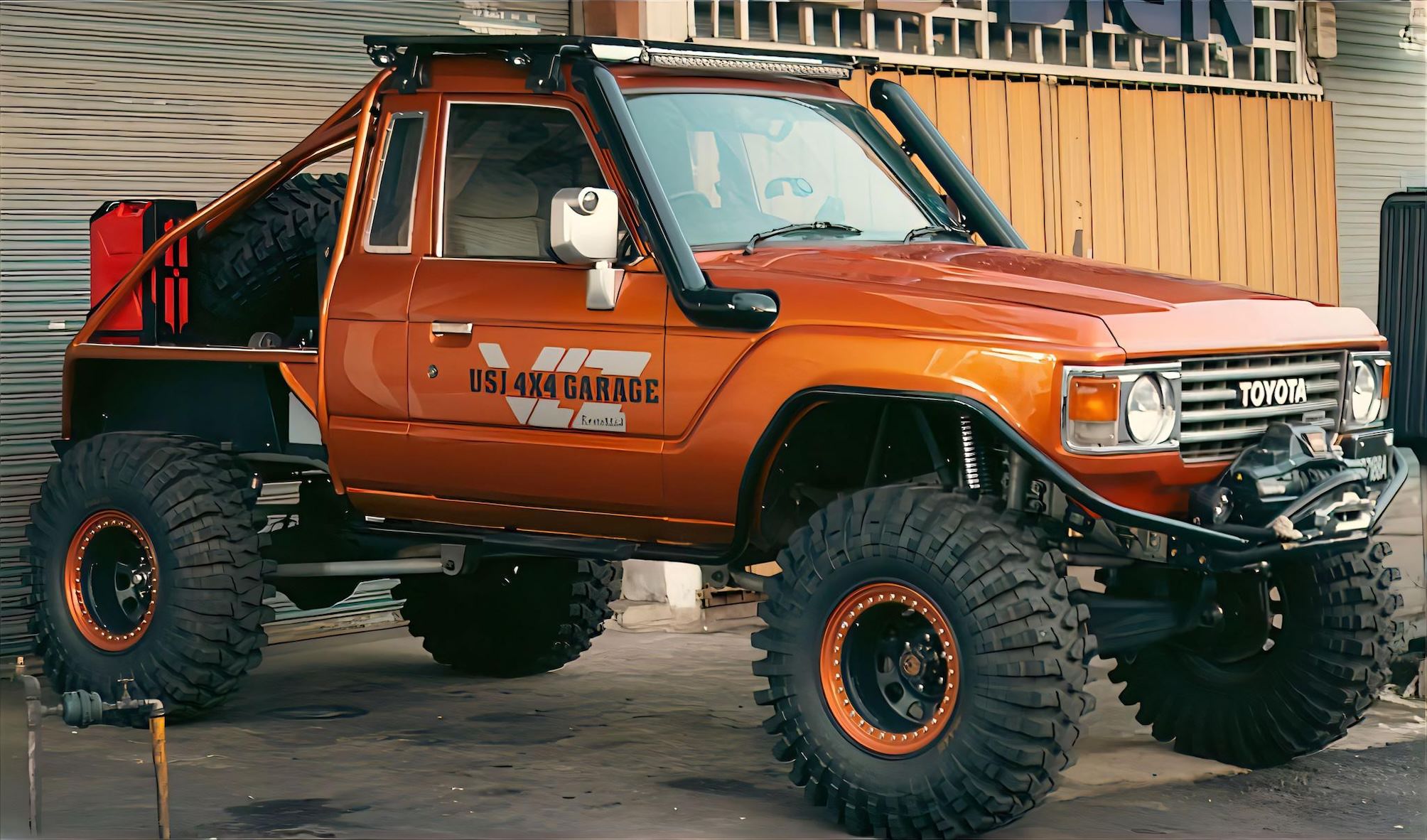
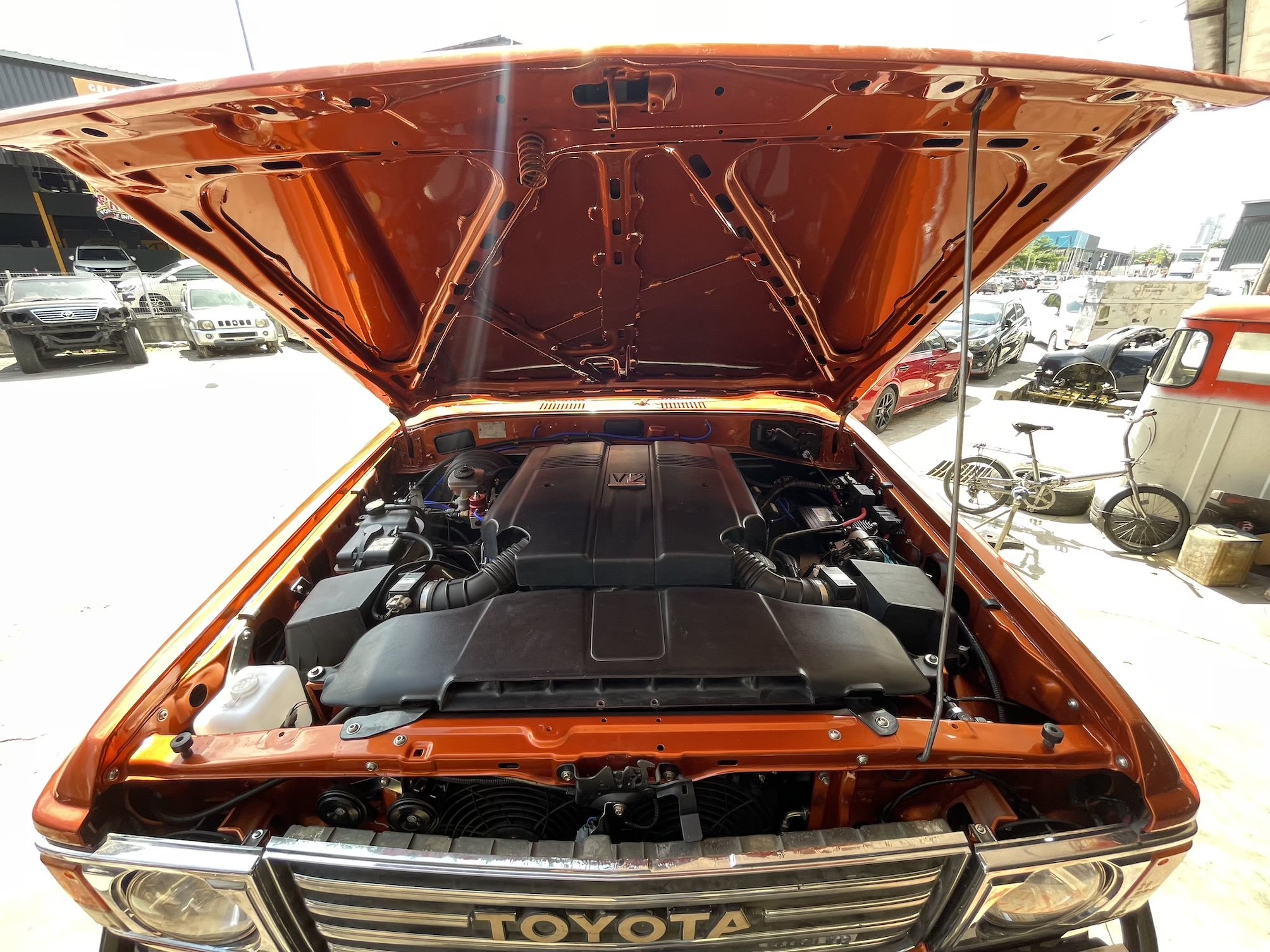
Most people swap a V8 or a Cummins into a 60 Series. The engine bay is big, the choices are obvious, and the results are known. We went the other way. This 1987 Land Cruiser now runs the 5.0-litre 1GZ-FE V12 from a Toyota Century, the same engine that moves Japanese prime ministers around, mated to the Century's own automatic and the Cruiser's dual-range transfer case. It is, as far as we know, the only one of its kind.
The objective
The 60 Series has always been a swap magnet. The bay is generous because Toyota knew from the start it would carry everything from a petrol six to the 12HT turbodiesel this car left the factory with. The usual answer is a small-block or a diesel. We wanted the answer nobody had bothered with: the smoothness of a twelve, the torque to move 38s, and enough fabrication to make it a real off-road vehicle rather than a show piece.
Where it started
A 1987 high-roof, five-speed manual 60 Series, originally fitted with the 4.0-litre 12HT turbodiesel inline-six. Solid bones, but nothing about a V12 swap is bolt-in. The build began the way every serious build here begins, with a complete teardown and an honest inspection of what we actually had before a single decision was locked in.
The engineering decisions
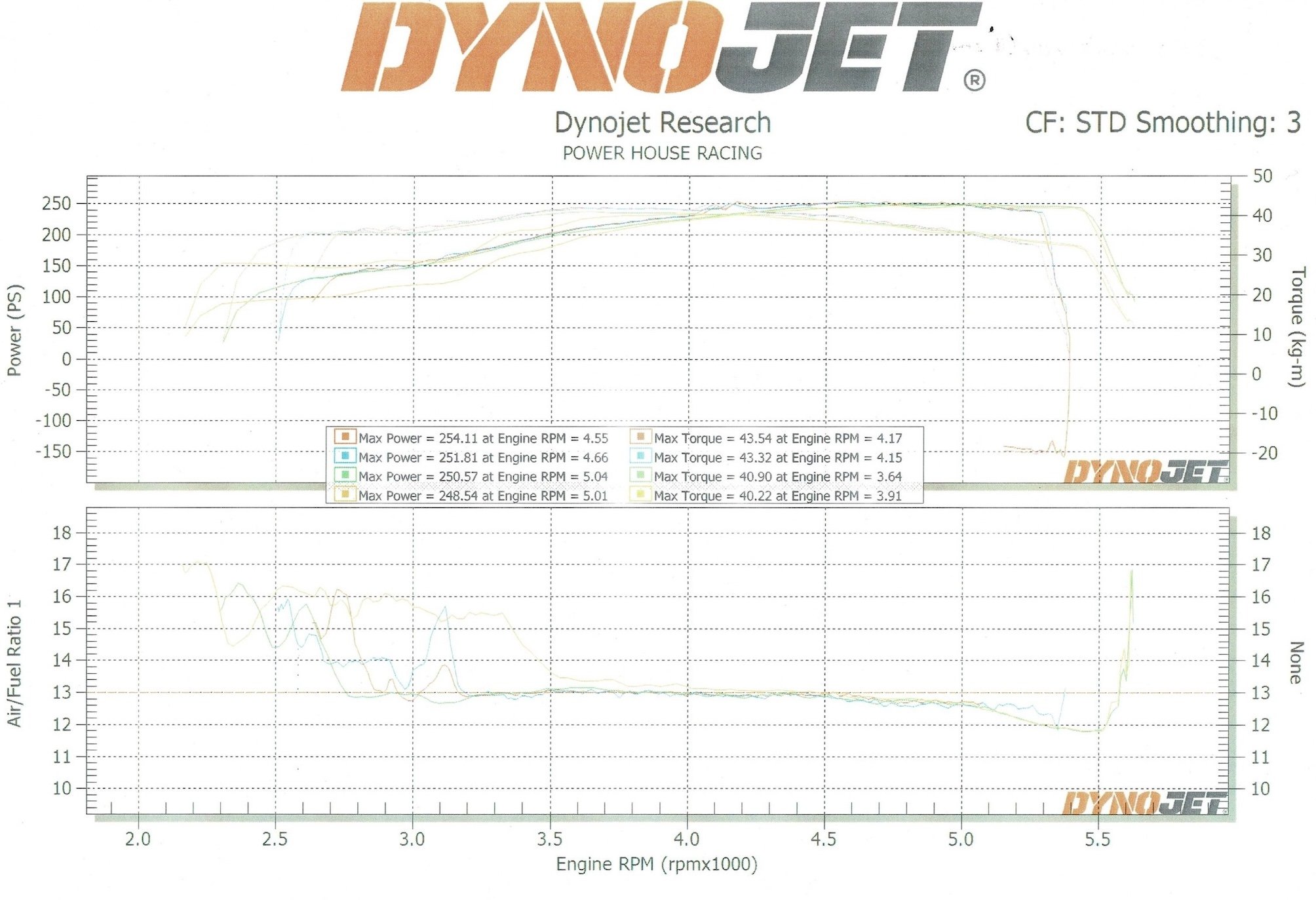
The Century 1GZ-FE is a 5.0-litre V12: double overhead cams per bank, variable valve timing, 10.5:1 compression, electronic fuel injection. Toyota quotes 295 hp and 295 lb-ft from 1,200 rpm. The real figures are widely accepted to be higher, and our dyno backed that up.
We kept the factory ECU rather than going standalone. That wasn't laziness. The original ECU lets the engine run on one bank of six if the other bank ever fails. On a vehicle built to go a long way from help, a limp-home mode on six cylinders is worth more than a few chased horsepower.
The Century's automatic transmission was retained and mated to the Land Cruiser's original transfer case, so full dual-range is still there when the track turns bad. Nothing about the off-road hardware was sacrificed to fit the drivetrain.
Fabrication and chassis
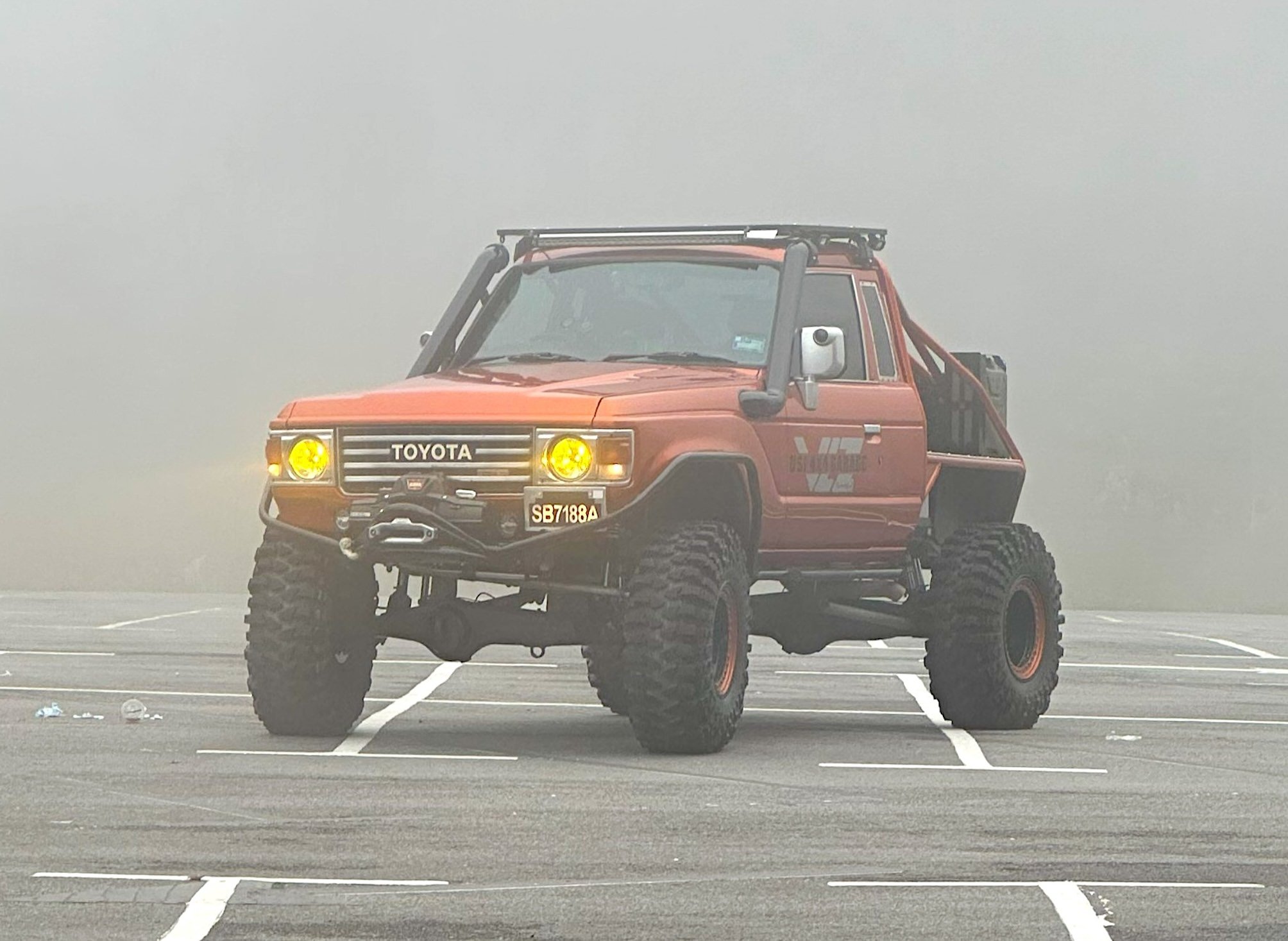
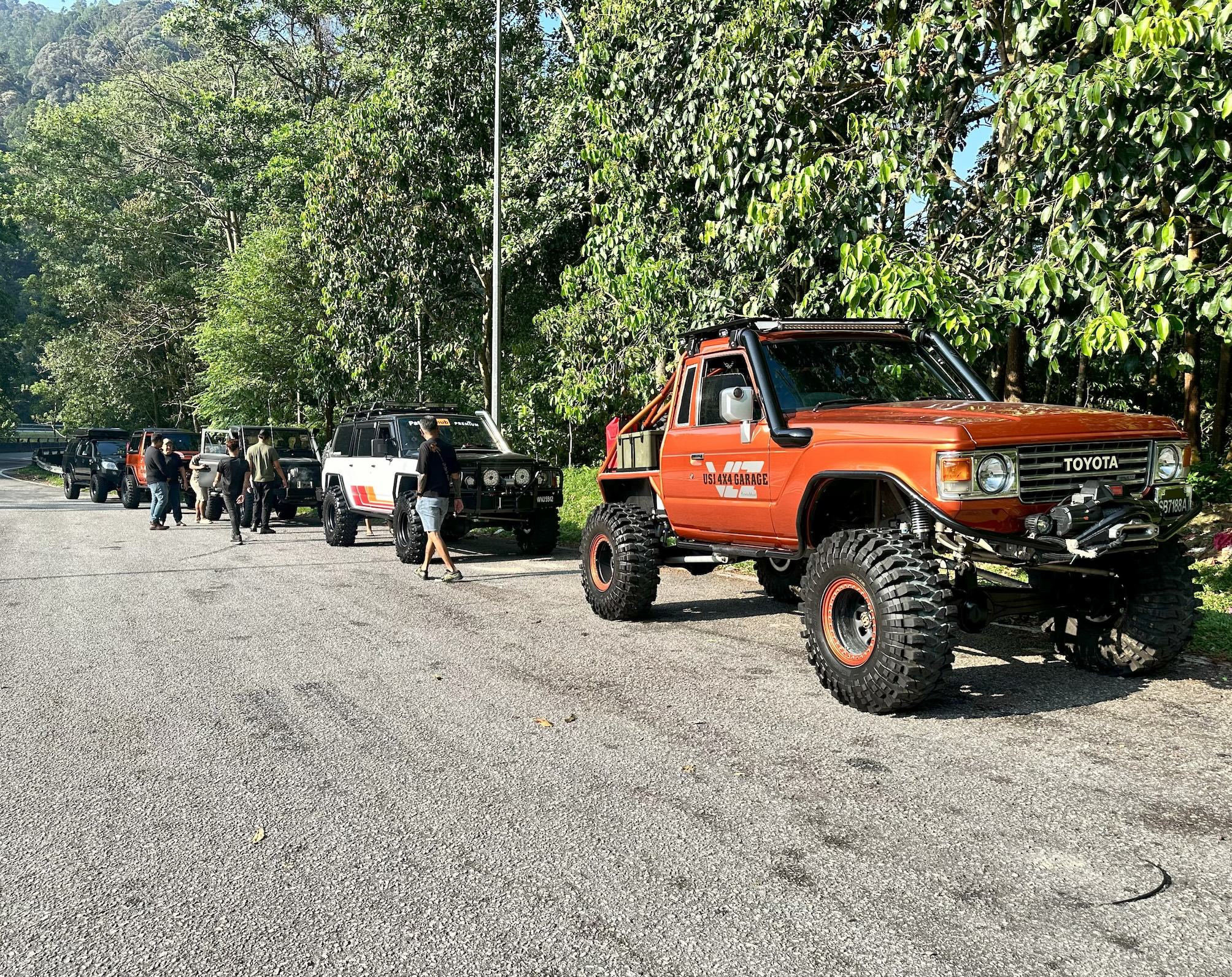
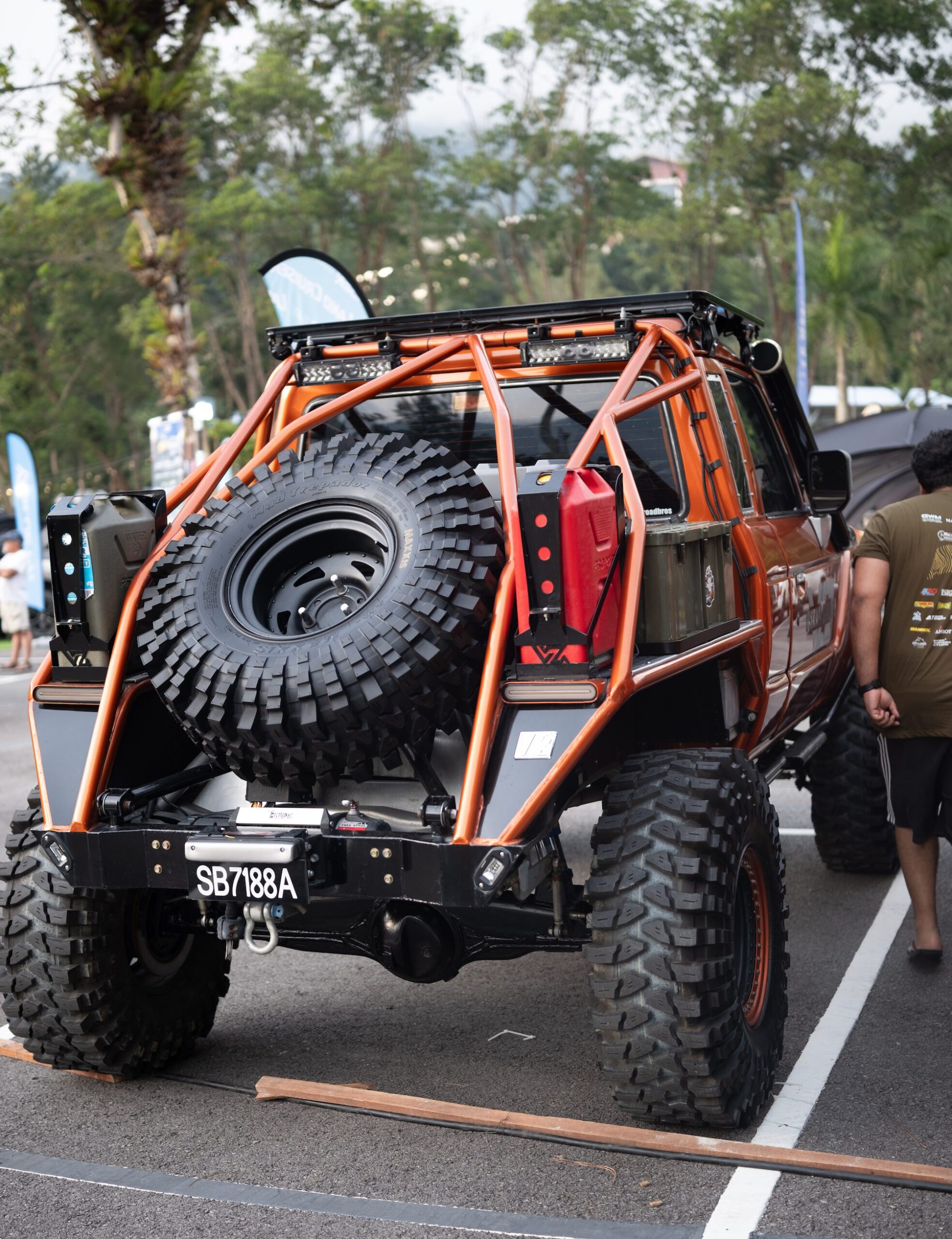
The ladder chassis was stripped and restored. The body was cut down to a two-door with a cropped tail, for less weight, a better departure angle, and a shape that suits the job. The rear end was rebuilt in tubular chromoly: a rigid section carrying the spare and jerry cans. Custom front and rear bumpers, also chromoly. Custom engine mounts and a custom exhaust to make the twelve sit and breathe properly. This is the part that can't be faked. It's all in-house metalwork.
Axles, suspension and traction
The axles were rebuilt and set up to be used hard: ARB air lockers front and rear, RCV chromoly shafts, and Yukon 4.88 gears to keep the 38.5-inch Maxxis Trepadors moving without strangling the engine. They ride on air struts with 14 inches of travel. The gearing, the lockers and the tyre size were chosen together, not bolted on one at a time. That is the whole point.
The photos
Where it is now
The build is finished and dyno documented, and it did what it was meant to do. It drives like a Century and climbs like a Cruiser. In November 2024 it was featured by Silodrome, one of the largest classic and alternative motoring publications in the world, with the full build and dyno results published under our name. As far as we can tell, no other Malaysian workshop has an in-house engineering build with an international feature like it.
Build led by Vishant Selvarajah at USJ 4x4 Garage, Subang Jaya, Selangor. Featured by Silodrome on 7 November 2024: "A Toyota Century V12-Powered Land Cruiser." Images courtesy of USJ 4x4 Garage.